
News
Interview: President Kvapil looks back at his first year in office
Online since 20-04-2026
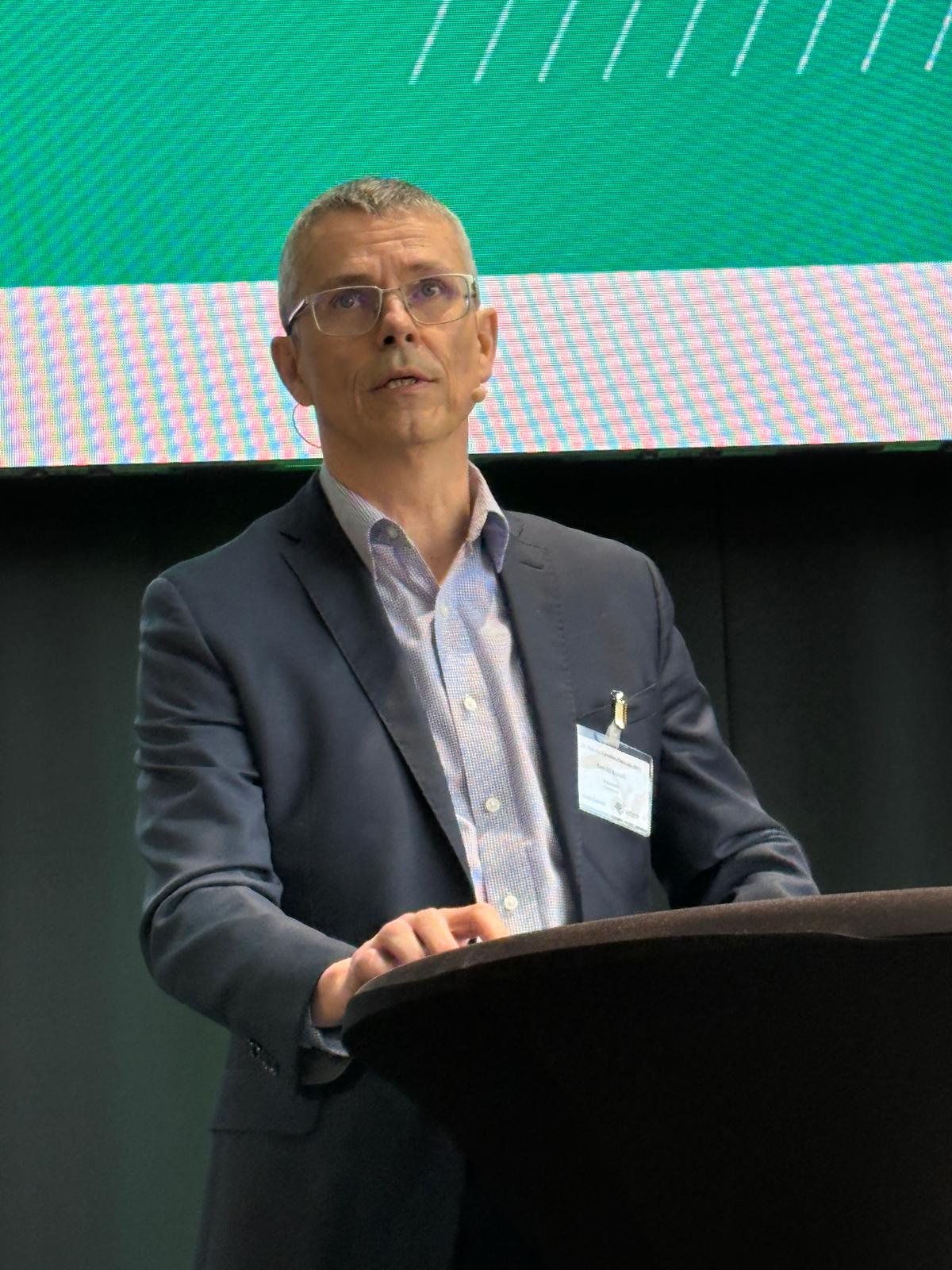
A year ago, in March 2025, Tomáš Kvapil was elected President of CLIMMAR. After his first twelve months in office, we take the opportunity to look back at this initial period, reflect on key developments, and discuss the main priorities ahead in the following interview.
Looking back at the past 12 months, what do you see as the key milestones for CLIMMAR?
It is important to note that the Board has been completely renewed, with no members continuing from the previous term. Despite this, the team quickly settled into their roles, assumed their responsibilities, and established effective cooperation, bringing new energy and a clearer direction to CLIMMAR.
We have intensified communication with European institutions and partner organisations such as CEMA, CETTAR, and COPA-COGECA. At the same time, we placed strong emphasis on improving information sharing and cooperation among member countries.
We have also reactivated our working groups, focusing on specific topics from legislation to relations with manufacturers.
Cooperation with SMEunited has also developed very positively. While in the previous period the cooperation was still being gradually set up – complicated by personnel changes on both the SMEunited side and within CLIMMAR – we now see this partnership as stable and beneficial. I consider SMEunited to be a real added value for CLIMMAR, not only in terms of supporting our internal functioning, but especially as an organisation that helps us establish ourselves at the European level.
What were the main challenges during your first year in office, and how did you manage them?
A major challenge was managing the exit of one of our key members – the British organisation BAGMA. This will likely remain one of the most difficult moments at the very beginning of my term. At the same time, we had to balance this loss within our budget.
Looking at it from a positive perspective, we managed the situation successfully. We stayed within our financial limits and, despite further budgetary challenges, were able to close the year with a positive result.
I also regret that, following the departure of Wim Overeem, we have not yet been able to fully restore the activities of the Education working group. However, I hope it will soon resume full operation, as education and generational renewal are key priorities for CLIMMAR.
After one year, how do you assess cooperation within the other CLIMMAR board members? Are you able to find common ground with colleagues from other European countries?
The new Board works very well together. We all recognise that we are new in these roles, but even without direct continuity from the past, we are successfully building on previous work and continuing it.
Special thanks also go to SMEunited and, in particular, to our Secretary General Fabian Haybach.
What specific projects is CLIMMAR planning to launch in 2026? What will be your main focus going forward?
In terms of traditional projects such as the DSI, the CLIMMAR Index, or the Branch Report our objectives are quite clear. At the same time, we will focus on strengthening relationships with the EU political sphere, particularly by intensifying the exchange of information on topics related to the Common Agricultural Policy.
We also want to focus more on key areas such as generational renewal in agriculture, investment support, and the development of smart farming.
One of the nearest milestones is to deepen communication with Copa-Cogeca. Following our initial meeting, , we agreed to hold a more in-depth, working-level meeting at EIMA in November 2026 focused on future cooperation. Another important direction is continuing the relationship with CEMA, which was initiated at Agribex in December 2025.
In addition, we are working on several internal technical topics, such as the full rollout of the CLIMMAR Hub and questions related to the existence and financing of our activities in ISO standardisation and regulation within the Standards and Regulation working group.
How is CLIMMAR developing cooperation with related organisations?
As mentioned, contacts have been established with both CEMA and Copa-Cogeca. The next step is to further develop and systematically maintain these relationships so that we can use them to advance our own interests.
As a starting point, it would already be very valuable to establish a truly active and intensive exchange of information about what is happening across the supply chain from manufacturers to end customers. We are positioned right in the middle of this chain, and therefore naturally influenced by both sides.
Are there plans to expand the membership base?
Yes, definitely. Based on our principle of openness, we are always ready to welcome new member countries.
However, it has become clear that openness alone is not enough – we need to actively work on this and proactively seek new members. Several concrete steps have already been defined for 2026, and I believe we will be successful in expanding our organisation by at least one new member during the year.
You hold a leadership role in your family business, serve as president of the national association SDZT, and lead CLIMMAR at the European level. How do you manage these roles? Have you had to delegate more responsibilities?
I would like to emphasise that neither I nor any Board members are full-time professionals dedicated solely to leading such organisations—and it cannot be our everyday “nine-to-five” job.
Our daily work consists of running our own companies, often on a 24/7 basis. The fact that we are also able to manage this agenda is only possible thanks to the support of colleagues in our national associations, who are true professionals in their roles and whom we can rely on.
Of course, I must also mention SMEunited and the support services they provide, especially Fabian Haybach and the entire team in Brussels.
It is important to note that the Board has been completely renewed, with no members continuing from the previous term. Despite this, the team quickly settled into their roles, assumed their responsibilities, and established effective cooperation, bringing new energy and a clearer direction to CLIMMAR.
We have intensified communication with European institutions and partner organisations such as CEMA, CETTAR, and COPA-COGECA. At the same time, we placed strong emphasis on improving information sharing and cooperation among member countries.
We have also reactivated our working groups, focusing on specific topics from legislation to relations with manufacturers.
Cooperation with SMEunited has also developed very positively. While in the previous period the cooperation was still being gradually set up – complicated by personnel changes on both the SMEunited side and within CLIMMAR – we now see this partnership as stable and beneficial. I consider SMEunited to be a real added value for CLIMMAR, not only in terms of supporting our internal functioning, but especially as an organisation that helps us establish ourselves at the European level.
What were the main challenges during your first year in office, and how did you manage them?
A major challenge was managing the exit of one of our key members – the British organisation BAGMA. This will likely remain one of the most difficult moments at the very beginning of my term. At the same time, we had to balance this loss within our budget.
Looking at it from a positive perspective, we managed the situation successfully. We stayed within our financial limits and, despite further budgetary challenges, were able to close the year with a positive result.
I also regret that, following the departure of Wim Overeem, we have not yet been able to fully restore the activities of the Education working group. However, I hope it will soon resume full operation, as education and generational renewal are key priorities for CLIMMAR.
After one year, how do you assess cooperation within the other CLIMMAR board members? Are you able to find common ground with colleagues from other European countries?
The new Board works very well together. We all recognise that we are new in these roles, but even without direct continuity from the past, we are successfully building on previous work and continuing it.
Special thanks also go to SMEunited and, in particular, to our Secretary General Fabian Haybach.
What specific projects is CLIMMAR planning to launch in 2026? What will be your main focus going forward?
In terms of traditional projects such as the DSI, the CLIMMAR Index, or the Branch Report our objectives are quite clear. At the same time, we will focus on strengthening relationships with the EU political sphere, particularly by intensifying the exchange of information on topics related to the Common Agricultural Policy.
We also want to focus more on key areas such as generational renewal in agriculture, investment support, and the development of smart farming.
One of the nearest milestones is to deepen communication with Copa-Cogeca. Following our initial meeting, , we agreed to hold a more in-depth, working-level meeting at EIMA in November 2026 focused on future cooperation. Another important direction is continuing the relationship with CEMA, which was initiated at Agribex in December 2025.
In addition, we are working on several internal technical topics, such as the full rollout of the CLIMMAR Hub and questions related to the existence and financing of our activities in ISO standardisation and regulation within the Standards and Regulation working group.
How is CLIMMAR developing cooperation with related organisations?
As mentioned, contacts have been established with both CEMA and Copa-Cogeca. The next step is to further develop and systematically maintain these relationships so that we can use them to advance our own interests.
As a starting point, it would already be very valuable to establish a truly active and intensive exchange of information about what is happening across the supply chain from manufacturers to end customers. We are positioned right in the middle of this chain, and therefore naturally influenced by both sides.
Are there plans to expand the membership base?
Yes, definitely. Based on our principle of openness, we are always ready to welcome new member countries.
However, it has become clear that openness alone is not enough – we need to actively work on this and proactively seek new members. Several concrete steps have already been defined for 2026, and I believe we will be successful in expanding our organisation by at least one new member during the year.
You hold a leadership role in your family business, serve as president of the national association SDZT, and lead CLIMMAR at the European level. How do you manage these roles? Have you had to delegate more responsibilities?
I would like to emphasise that neither I nor any Board members are full-time professionals dedicated solely to leading such organisations—and it cannot be our everyday “nine-to-five” job.
Our daily work consists of running our own companies, often on a 24/7 basis. The fact that we are also able to manage this agenda is only possible thanks to the support of colleagues in our national associations, who are true professionals in their roles and whom we can rely on.
Of course, I must also mention SMEunited and the support services they provide, especially Fabian Haybach and the entire team in Brussels.